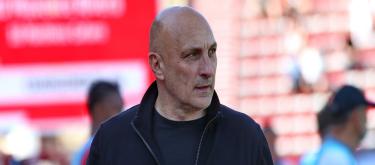
Leagendary Romanian head coach Mircea Lucescu died from a heart attack at the age of 80..
2026-04-08 13:45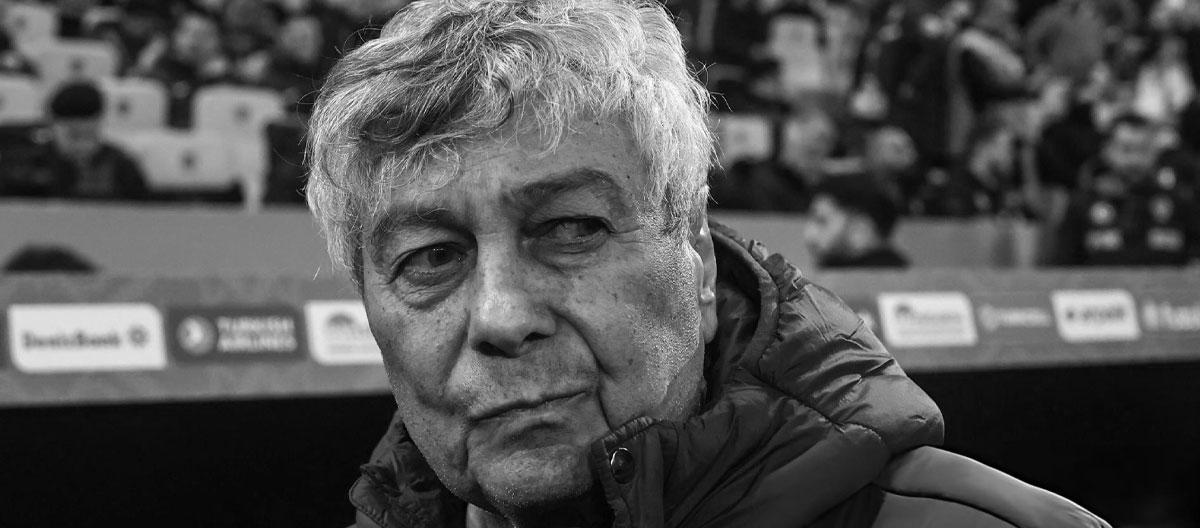
The Romanian Football Federation confirmed on its official website on Tuesday that legendary head coach Mircea Lucescu had died from a heart attack at the age of 80.
The Romanian Football Federation stated in its obituary that Lucescu fell into a coma due to a heart attack and died in a hospital on April 7th, local time in Romania. He was, is, and will always remain one of the greatest legends in Romanian football history.
The governing body also announced that a minute's silence will be observed before all league matches in Romania this week in memory of Lucescu.
In his eulogy, Romanian Football Federation President Răzvan Burleanu said, "Today is a dark day for Romanian and world football. We have lost a legendary figure who dedicated his life to the sport. Mircea Lucescu was not only a coach, but also a mentor to generations of players. He loved football more than anything else in his life, and his impact on Romanian football is immeasurable."
UEFA President Aleksander Čeferin, in his eulogy, said, "European and world football have lost a remarkable figure whose influence, status, and legacy will endure for generations. Mircea Lucescu was one of the true originators of the sport, possessing rare footballing wisdom. His dignity and passion, his contributions to the sport, are immeasurable."
"Throughout his extraordinary career, he earned the admiration and respect of the entire football community through his profound knowledge, exceptional leadership, and deep understanding of the true value of football. His presence shaped teams, inspired players and colleagues, and left a far-reaching impact on the sport that extends far beyond the sidelines."
Lucescu suffered a heart attack (ventricular tachycardia) on March 29, 2026, during the technical meeting of the semi-final of the European qualifying play-offs in Romania's 0-1 defeat to Turkey. He was rushed to the hospital and underwent minimally invasive surgery to implant a defibrillator.
Lucescu's condition initially stabilized and he was scheduled for discharge, but in early April (just before his planned discharge on April 3), he suffered a myocardial infarction, causing his condition to deteriorate rapidly.
Between April 5 and 6, he experienced multiple severe arrhythmias and did not respond well to treatment, leading to his transfer to the intensive care unit and a medically induced coma. Despite the medical team's best efforts, they were ultimately unable to save him.
Furthermore, The Guardian revealed that reporters had personally called Lucescu in March to inquire about his health.
At the time, to avoid causing undue concern for his health, Lucescu deliberately concealed the devastating news of his heart condition, only stating that he had been hospitalized three times in December. He emphasized that he "couldn't collapse like a coward and give up," as leading Romania to qualification for the 2026 FIFA World Cup in the United States, Canada and Mexico remained one of his most important tasks.
About Mircea Lucescu
Lucescu was born on July 29, 1945, in Bucharest, Romania. He was 1.77 meters tall and played as a winger for Dinamo Bucharest and is a Romania international player who represented his country at the 1970 FIFA World Cup in Mexico.
After retiring in the early 1980s, Luchescu devoted himself to coaching, serving as head coach at Dinamo Bucharest, Pisa, Brescia, Reggiana, Inter Milan, Galatasaray, Beşiktaş, Rapid Bucharest, Zenit Saint Petersburg, and Dinamo Kyiv. He also twice coached the Romania national team, leading them to their first-ever qualification for the European Championship finals.
Luchescu is best known for his time as head coach of Shakhtar Donetsk from 2004 to 2016.
During those 12 years, Luchescu nurtured numerous household names among former Brazil international players, including Willian, Fernandinho, Douglas Costa, Jadson, Luiz Adriano, Elano, and Brandao.
He led his teams to eight Ukrainian Premier League titles, seven Ukrainian Super Cup titles, and six Ukrainian Cup titles.
He also led the team to the UEFA Cup title in the 2008/09 season, making Shakhtar Donetsk the first and only Ukrainian club in history to win a UEFA premier club competition title.
Image source: Internet / The Guardian